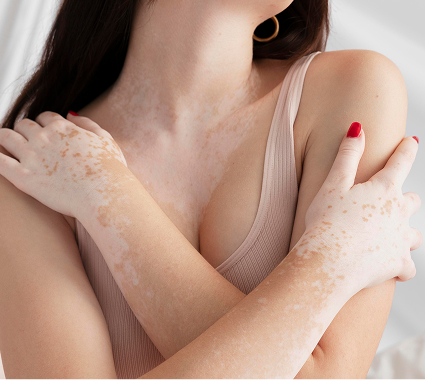
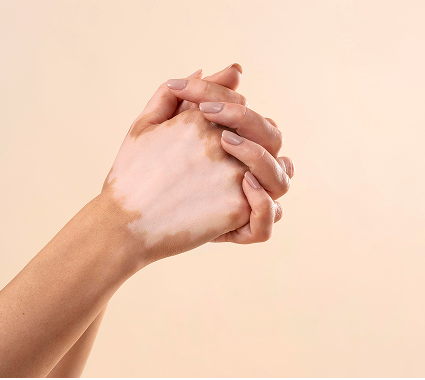
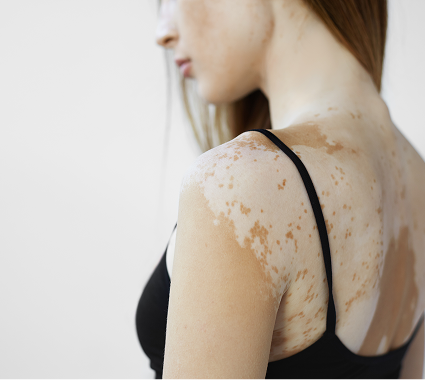
The appearance of white patches on the skin can significantly affect a patient’s confidence and self-image. Many people worry that others may mistakenly believe it is a contagious disease or may not understand the true cause of the change in skin color.
Vitiligo is not physically harmful, but it is a chronic condition that can impact quality of life, particularly in psychological and social aspects. Having a proper understanding of the condition and receiving care from a medical specialist can help manage the symptoms and enable individuals to live more confidently.
What is PROGRAM VITILIGO
Vitiligo is a skin condition in which the pigment-producing cells (melanocytes) are destroyed. As a result, the affected areas of skin lose their pigment and develop into clearly defined white patches.
This condition is classified as an autoimmune disease, meaning it occurs when the body’s immune system malfunctions and mistakenly attacks its own pigment cells.
Not a contagious disease.
Not caused by an infection.
It is not life-threatening, but it is a chronic condition that requires ongoing care.
Key characteristics of vitiligo
White patches
Has clear boundaries and may expand in size or spread further.
Common areas
Face (around the eyes and mouth), hands, feet, skin folds, genital area, and areas that experience frequent friction.
Other associated symptoms
In general, it is not painful or itchy, but the depigmented skin is more sensitive to sunlight than normal skin.
The main causes of vitiligo
In autoimmune conditions, T cells attack and destroy melanocytes.
Genetics Approximately 30% of patients have a family history of vitiligo.
Triggering factors include stress, skin injuries such as wounds or sunburn, and hormonal changes.
These factors may trigger the spread of white patches or cause new ones to appear.
Diagnosis of Vitiligo
A dermatologist can diagnose vitiligo by…
Physical examination
Using a Wood’s Lamp to examine the skin in a dark room.
The white patches will fluoresce clearly, allowing the boundaries of the lesions to be identified more precisely.
Guidelines for Skin Pigmentation Treatment and Restoration
Although there is currently no permanent cure, treatment can help stimulate repigmentation and prevent the lesions from spreading.
Medical treatment approaches used in clinical practice
topical spot treatment
For example, steroid medications or calcineurin inhibitors.
Light therapy (Phototherapy)
To stimulate the activity of the remaining pigment cells.
Procedural or surgical treatment
In some cases, the doctor may consider transplanting pigment cells from healthy skin.
Concealing depigmented spots
Using medical-grade cosmetics or skin-tone correcting creams to improve overall skin tone uniformity.
Important Self-Care for Patients with Vitiligo
Protect your skin from sunlight Skin that lacks melanin is at a higher risk of sunburn, so you should consistently use a high-SPF sunscreen.
Manage stress Stress is a major triggering factor of the disease.
Consult a dermatologist regularly especially if the lesion is rapidly expanding, in order to adjust the treatment plan appropriately.
Frequently Asked Questions (FAQ)
Q: Is vitiligo a contagious disease?
A: It is not contagious. Vitiligo is caused by an abnormality of the immune system and cannot be transmitted through physical contact, sharing personal items, or close proximity.
Q: What is the main cause of vitiligo?
A: The main cause is an autoimmune condition, along with genetic factors, and it may be triggered by stress or skin injury.
Q: Will white patches continue to spread and become larger over time?
A: It has the potential to progress, but the rate of progression varies from person to person. Appropriate treatment and avoiding triggering factors can help control the advancement of the condition.